Property Maintenance Hull: Key Areas to Inspect Throughout the Year
Owning or managing property in Hull means dealing with a very specific mix of pressures. The city’s coastal exposure, regular rainfall, chmyorkshireltd.co.uk Fence Contractor cold snaps, and wind-driven weather all take a quiet toll on buildings. Problems rarely arrive all at once. More often, they build in stages, a slipped tile in winter, a damp patch in spring, a blocked gutter in autumn, and then a much larger repair bill when the issue finally forces itself to the surface.
That pattern is familiar to anyone who has worked in Property Maintenance Hull for more than a few years. A roof that looked serviceable in October can start leaking by January. External render that seemed sound in summer can begin to crack after repeated freeze-thaw cycles. Timber windows that only needed minor care can move into full replacement territory if moisture gets a long enough head start. The real skill is not simply reacting to damage, but spotting vulnerable areas before they become expensive.
A good maintenance routine is not glamorous, though it is one of the strongest ways to protect property value. Whether the building is a family home, a buy-to-let, a commercial unit, or part of a wider Property Renovation Hull project, year-round inspection saves money, prevents disruption, and helps owners make better decisions about timing. Some jobs are quick. Others need a skilled General Contractor to coordinate roofers, joiners, electricians, or damp specialists. Either way, the best results come when you know what to look at, and when.
Start with the building envelope
If a property is going to fail anywhere, it often starts on the outside. The building envelope, meaning the roof, walls, windows, doors, and drainage points, takes the worst of the weather. In Hull, where wind and driving rain can expose even small weaknesses, these areas deserve repeated attention through the year.
The roof is usually first on the list, and for good reason. You do not need a dramatic missing section for trouble to begin. A cracked slate, a lifted tile, or a flashing joint that has started to open can be enough to let in water. It may not show inside straight away. Sometimes the loft insulation hides it. Sometimes the leak tracks along timbers before appearing in a bedroom ceiling far from the real entry point. By the time a stain appears indoors, the damage has often been active for longer than the owner suspects.
Chimney stacks are another weak spot, especially on older Hull properties. Mortar joints weather over time, lead flashings can split or lift, and pots or caps may loosen. Small masonry issues at roof level tend to worsen quickly because of exposure. Repointing early is usually straightforward. Leave it too long and the repair can grow into brick replacement, internal water damage, and scaffold costs that were avoidable.
Walls need a closer look than many people give them. Hairline cracks are not always serious, but they should not be dismissed automatically. The key question is whether they are stable surface marks or signs of movement, trapped moisture, or failed render. On brick properties, look for spalled faces, deteriorating mortar, and vegetation growth in joints. On rendered buildings, watch for hollow-sounding patches, staining, or blistering paint. In coastal climates, moisture finds its way into very small defects.
Windows and external doors are often judged only by how they look from the street. That can be misleading. Frames might still seem presentable while seals have failed, timber has softened at the sill, or hinges have started to pull out. A stiff window is not just an annoyance. It can be an early sign of swelling, distortion, or water ingress. If condensation forms between panes in double glazing, the sealed unit has likely failed. Left alone, that means poorer thermal performance and a greater chance of surrounding frame issues.
What changes with the seasons
Property inspection works best when it follows the weather rather than the calendar alone. Different seasons reveal different faults. A building can pass a summer walk-around and still be vulnerable heading into winter.
Late winter and early spring
This is the moment when hidden weather damage tends to show itself. Gutters may have taken a beating from storms and debris. Downpipes can crack at joints. Water that overflowed repeatedly during winter might leave dark streaks on brickwork or saturate the ground near the footings. Inside, this is when mould around cold corners often becomes obvious after months of closed windows and damp air.
Roofs should be checked as soon as it is safe to do so, especially after any period of high wind. One local case I remember involved a terrace where only three tiles had slipped. It did not look dramatic from the pavement, but rain had been entering for weeks. By the time the owner noticed a ceiling stain, insulation was soaked, one rafter end was beginning to rot, and plasterwork in two rooms needed replacement. What could have been a modest roof repair turned into a much broader remedial job.
Spring is also a sensible time to inspect exterior paintwork, sealants, and exposed timber. If paint has broken down over winter, the warmer months give you a window to address it before the next wet season arrives.
Summer
Dry weather makes summer ideal for maintenance that is harder to do in rain or cold. This is when many owners schedule pointing, render repairs, roof work, external decoration, and drainage improvements. The building dries faster, access is safer, and contractors can usually assess materials more accurately.
Summer is also the best time to assess ventilation. That may sound backwards, since damp issues feel like a winter problem, but summer lets you identify whether kitchens, bathrooms, utility rooms, and lofts are actually moving air properly. Extractor fans that sound operational are not always effective. Flexible ducting can sag, vents can clog, and air paths through old loft spaces can become blocked by insulation or stored belongings.
If you are planning Property Renovation Hull works, summer often reveals the true scope of a building. Floor levels can be checked without worrying about wet footwear and muddy access. Subfloors are easier to inspect. External drainage lines are simpler to test. It is a practical season for seeing what a property really needs, rather than making decisions during emergency weather conditions.
Autumn
Autumn is preparation season. Leaves begin to fill gullies and gutters, drain covers trap debris, and daylight hours shrink. If a property goes into winter with blocked rainwater goods, the chances of damp problems rise sharply. Overflowing gutters do not just waste water down the wall. They can saturate masonry, stain render, rot soffits, and contribute to internal damp where solid walls struggle to dry out.
Boilers and heating systems should be checked before the cold arrives. Every year, plenty of owners wait until the first real drop in temperature before discovering a faulty pump, an unreliable thermostat, or a radiator circuit full of cold spots. Preventive servicing is cheaper and far less disruptive than an emergency callout in December.
Autumn is also the time to look hard at external ground levels. Soil, flowerbeds, paving, and gravel paths sometimes creep up over the years. If the outside level sits too high against the wall, moisture has a much easier route indoors. On older properties with solid walls, that can mimic rising damp and lead people toward the wrong treatment.
Winter
Winter inspection is less about planned outside work and more about close observation. This is when heating, ventilation, insulation, and weather tightness are tested for real. Cold spells quickly expose weak loft insulation, draughty openings, and inadequate extraction in wet rooms. Condensation on windows every morning is a warning, not just a seasonal nuisance.
Frozen pipes are less common in well-kept homes than they once were, but vulnerable pipe runs still exist in lofts, outbuildings, extensions, and under kitchen units against external walls. Slow drips under sinks can become worse in winter because materials contract and pressure patterns change.
A property does not need to be old to suffer from winter faults. Some newer homes have their own issues, especially where original workmanship around seals, vents, and roof penetrations was rushed. I have seen fairly modern extensions with cold bridging around steel supports and roof lanterns, leading to localised condensation that owners understandably mistook for a roof leak.
Drainage is less visible, and often more important
If I had to pick one area that owners neglect most often, it would be drainage. Because much of it is hidden, it gets attention only when there is backing up, ponding, or a bad smell. By then, damage may already be underway.
Surface water should move away from the building cleanly. That means gutters flowing correctly, downpipes discharging where they should, gullies remaining open, and paving falling away from the structure rather than toward it. Even a slight reverse fall on a patio can keep an external wall permanently damp. The owner may focus on redecorating indoors while the real source sits a few feet outside.
Foul drainage matters too. Slow sinks, toilets that do not clear well, or recurrent odours near inspection chambers can point to partial blockages or damaged pipework. Tree roots, displaced joints, grease buildup, and collapsed sections all turn up regularly in older properties. A drain survey is not always needed, but repeated symptoms should never be shrugged off.
Where a property has been altered over time, old and new drainage lines do not always integrate neatly. Extensions, converted outbuildings, and redesigned kitchens can leave a messy inheritance underground. This is one reason a competent General Contractor is worth involving on bigger maintenance or renovation jobs. Good contractors think beyond the visible finish and trace how water, waste, heat, and ventilation actually move through the building.
Interiors tell the truth if you know how to read them
External checks matter, but the inside of a property often gives earlier clues than owners expect. A fresh crack above a door, bubbling paint on a chimney breast, a skirting board pulling away from plaster, or a persistent musty smell under the stairs can each point toward a wider issue.
Damp is the classic example of a symptom that gets misread. Not all damp is the same. Condensation behaves differently from penetrating damp, and both differ from leaks or moisture entering at high ground levels. A black mould pattern in corners and behind wardrobes usually points to cold surfaces and poor air movement. A yellow-brown tide mark with damaged plaster near the base of a wall can suggest a different source. Damp around a chimney breast may come from failed flashings, defective flaunching, or redundant flues holding moisture.
Flooring can also reveal trouble. Laminate that lifts at the joints, timber that cups, or vinyl that discolours along the edges may indicate moisture below. In suspended timber floors, poor subfloor ventilation can create decay that remains hidden until a board softens underfoot. I have walked through homes where owners assumed the floor was simply old, when the real problem was blocked air bricks and years of trapped humidity in the void.
Ceilings and loft hatches deserve more attention than they get. Fine staining, slightly textured plaster patches, or repeated decorator repairs in the same spot often tell a story. If insulation in the loft is patchy, compressed, or damp, the cause should be investigated rather than covered over. Loft spaces are good at keeping secrets, but not forever.
Services need inspection too, not just the structure
Buildings fail through systems as often as fabric. Electrical installations age. Plumbing joints wear. Extractor fans clog. Heating controls drift out of accuracy. None of these faults look dramatic until they affect safety, comfort, or bills.
Consumer units should be current enough to provide proper protection, and testing intervals should be taken seriously, especially in rented property. Flickering lights, warm sockets, tripping circuits, and DIY alterations are all warning signs worth acting on quickly. Water and electricity share space in bathrooms, kitchens, and utility areas, so small defects should not be left to gather risk.
Plumbing maintenance is often reduced to checking for obvious leaks, but pressure balance matters too. A system with recurring drops in pressure, noisy pipework, or inconsistent hot water performance is telling you something. Sometimes it is a straightforward vessel or valve issue. Sometimes it points to hidden loss. Catching that early prevents damage to finishes and keeps replacement costs down.
Ventilation sits in a strange middle ground because many people do not think of it as maintenance. It is. Fans, trickle vents, cooker extraction, air bricks, and loft ventilation all contribute to how the building handles moisture. A bathroom fan that is undersized or clogged may only cost a modest amount to replace, but failing to do so can eventually mean mould treatment, redecorating, and repeated tenant complaints.
The areas that are easiest to forget
Certain parts of a property receive very little attention simply because they are awkward, hidden, or out of everyday use. Those are often the exact places where early deterioration starts.
Here are five areas worth checking at least once or twice a year:
- loft spaces, especially around chimneys, valleys, and insulation edges
- air bricks and subfloor vents, which are easily blocked by soil, plants, or paving
- seals around baths, showers, sinks, and worktops
- behind large furniture on external walls, where condensation can go unnoticed
- outbuildings and garages, particularly roof sheets, junctions, and door thresholds
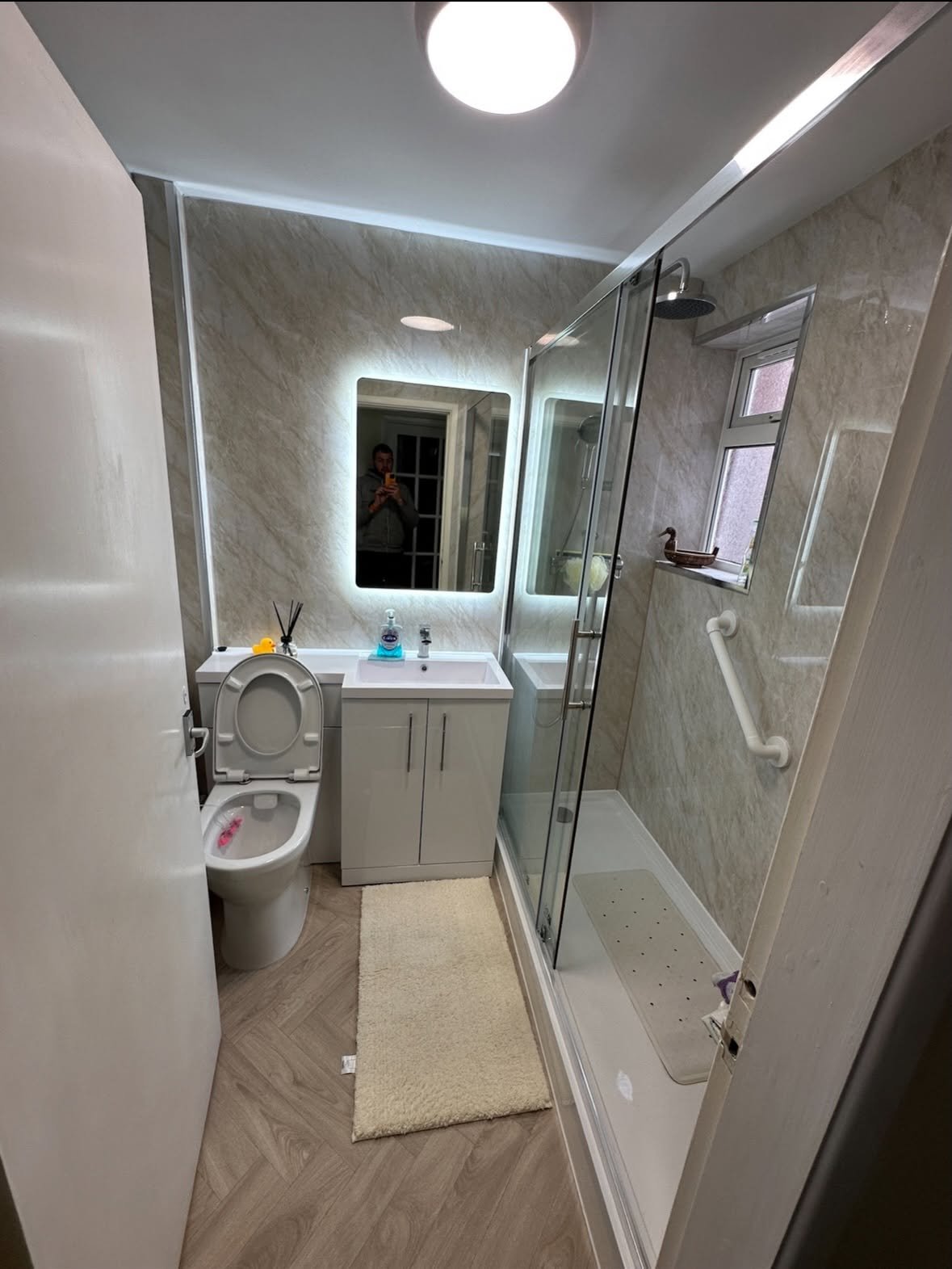
Shower enclosures are a frequent culprit. Water escapes through failed silicone or a cracked tray edge, seeps into floors or partition walls, and stays hidden until skirtings swell or ceilings below mark. By then, the repair is no longer just a reseal. It may involve carpentry, plastering, and replacing rotten sheet material.
Garages and sheds matter more than people think, especially where they adjoin the house or store equipment, freezers, or electrical supplies. Corrugated roofs, old felt coverings, and low-level thresholds can all fail quietly. If an outbuilding wall remains damp for months, adjacent structures may start to suffer too.
Maintenance versus renovation, knowing when one becomes the other
Not every defect needs a major project. Equally, not every recurring patch job is good economy. There is a point where routine maintenance becomes piecemeal spending, and a broader upgrade becomes the better route.
Take timber windows as an example. If the frames are fundamentally sound, isolated repairs, resin work, draught sealing, and repainting may add many years of service. But if decay is widespread, joints are loose, glazing retention is poor, and thermal performance is low, repeated spot repairs can cost more over time than a planned replacement programme.
The same judgment applies to roofs, kitchens, bathrooms, and outdated layouts. During Property Renovation Hull schemes, experienced teams often uncover long-standing maintenance issues that were impossible to solve properly at surface level. A tired bathroom might not just be dated. It may have poor extraction, water-damaged substrate, and badly routed pipework. A cracked ceiling may not just need plaster. It may need joist repair, insulation upgrades, and better ventilation above.
The key is to avoid false economy. Spending £400 here and £700 there on recurring fixes can feel manageable, but over two or three years it may exceed the cost of doing the job once, properly, with a coordinated plan.
When to bring in a professional team
Owners can and should carry out visual checks themselves, but some issues need qualified assessment. That is particularly true when water ingress, movement, electrical risk, or hidden structural defects are involved. The right General Contractor does more than send trades to patch symptoms. They sequence work, identify the source, and prevent one repair from interfering with another.
It usually makes sense to call in professional help when you notice any of the following:
- repeated leaks or damp patches that return after decoration or minor repair
- cracks that widen, step through brick joints, or affect door and window operation
- rotten timber, soft flooring, or mould that extends beyond a small local area
- drainage failures, standing water, or consistent gutter overflow
- plans for wider refurbishment where maintenance issues overlap with renovation work
A good contractor will not always recommend the biggest job. In fact, the better ones often save clients money by separating urgent works from desirable upgrades. They know when repointing is enough and when masonry needs more involved repair. They know when a bathroom can be salvaged and when opening up is the honest answer.
A yearly rhythm that keeps buildings healthier
The most effective maintenance strategy is steady rather than reactive. Walk the exterior after major weather. Check inside cupboards, corners, and lofts before problems become visible in living spaces. Clear gutters before winter. Test extractors and heating before they are needed most. Keep notes and photographs, not because property care needs to become bureaucratic, but because patterns matter. A crack that has not changed in three years is a different matter from one that has grown since last autumn.
Hull properties, from older terraces to modern builds, reward attentive ownership. They do not need constant intervention, but they do need informed observation. Small defects have a habit of combining. A blocked gutter leads to a damp wall. A damp wall weakens plaster and paint. Poor ventilation slows drying. By the time the issue is impossible to ignore, several trades may be needed instead of one.
That is why good Property Maintenance HUll is never just about fixing what is broken today. It is about understanding how a building behaves across wet months, dry months, windy spells, and cold snaps, then acting while options are still open. When that happens, repair bills stay lower, occupants stay more comfortable, and the property holds its value with far less drama.
CHM Yorkshire Ltd
Hull
HU9 5BU
Tel: 01482 455159
Website: https://www.chmyorkshireltd.co.uk